Fundraising can often feel like a numbers game: identify a donor, submit a proposal, wait for a response and move on to the next one. But for small, grassroots organisations, building sustainable funding relationships requires a different approach.
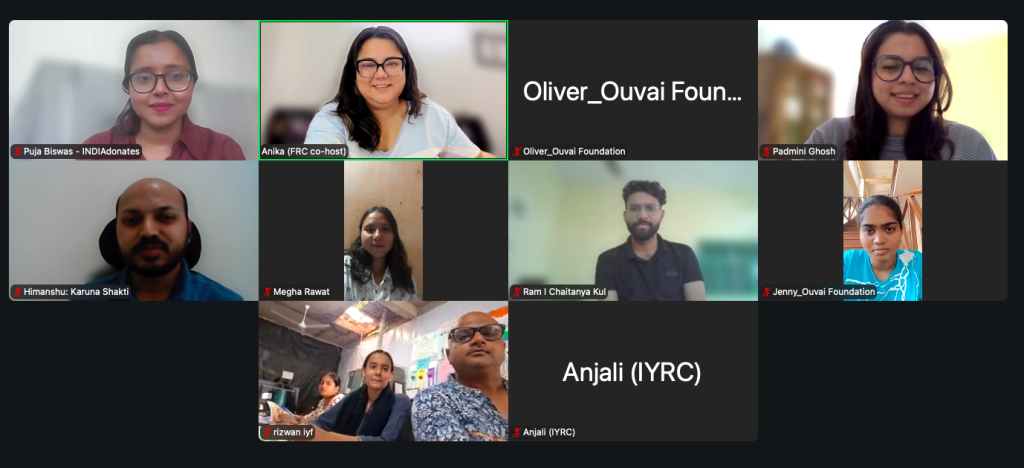
This was the focus of the latest Community Connect fundraising session, led by Puja Biswas from IndiaDonates, which brought together our cohort of grassroots organisations to explore practical ways of identifying donors, building relationships and developing fundraising strategies that match their organisation’s size, stage and work.
Rather than treating fundraising as simply asking for money, the session encouraged participants to see it as a long-term process of research, relationship-building, communication and persistence.
Here are some brilliant insights from Puja’s session:
1. Finding the right funding fit
The session explored funding avenues including institutional donors, CSR foundations, family foundations, HNIs and online platforms. A key takeaway was that not every donor is the right fit for every organisation.
For newer and smaller NGOs, local businesses, family foundations, individual donors and smaller giving networks may offer more accessible entry points. Fundraising, therefore, starts with understanding who is likely to care about your work, why, and when to approach them.
2. From an ₹80 lakh project to a donor map
To make this approach practical, Puja introduced a case study involving a mobile medical unit project across Maharashtra, Uttarakhand and Haryana, with a total project cost of over ₹80 lakh.
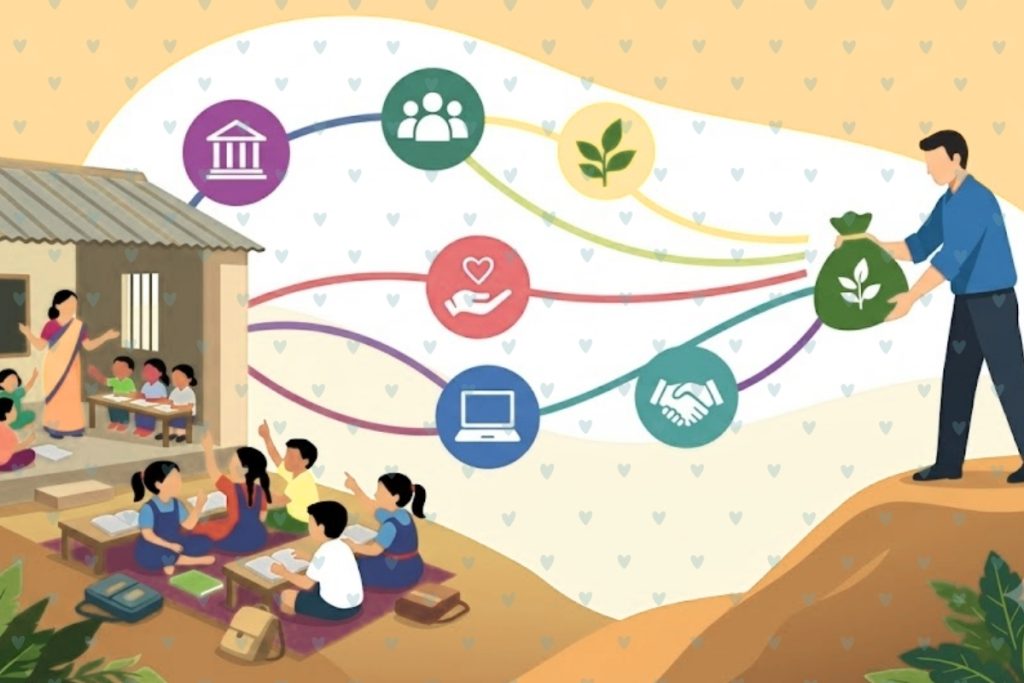
Rather than looking for one donor to fund the entire project, participants were encouraged to break the requirement down into smaller components and identify potential partners for each.
A pharmaceutical company, for instance, could potentially support medicines. Vehicle manufacturers could be explored for the mobile unit itself, while local businesses or community networks could be approached for specific local requirements.
The exercise demonstrated an important fundraising principle: a large project does not necessarily need one large donor.
Breaking a project into tangible components can make it easier to identify potential supporters and create multiple entry points for partnership
3. Research before outreach
A significant part of the session focused on donor mapping. For small organisations, good research can help answer questions such as:
-
Who has funded organisations working on similar issues?
-
Which companies operate in the areas where we work?
-
Which family foundations support our thematic areas?
-
What kinds of projects has a potential donor supported before?
-
And who within an organisation should we approach?
The facilitator introduced participants to various resources alongside tools such as LinkedIn and AI-powered research platforms. At the same time, the session stressed the importance of verifying information and being careful about sharing sensitive organisational or personal data with AI tools.
The objective is not simply to create a long list of donors. It is to build a focused donor database that records potential funders, their areas of interest, contacts, previous interactions, follow-ups and next steps.
4. Fundraising is a funnel, not a single ask
Fundraising can also be viewed as a funnel: many prospects may be identified, fewer respond, fewer still enter conversations, and only some eventually fund the work. Rejection is part of the process, making consistent relationship-building important even when there is no immediate funding opportunity.
This can include sharing updates, inviting donors to events, introducing them to the work or following up at the right time. January to March is a key period for CSR outreach, when companies plan their giving for the next financial year.
5. Don’t underestimate local relationships
For grassroots organisations, proximity can be an advantage.
Local companies, business networks, community groups and individual donors may have a stronger connection to the communities and issues an organisation works with. Rather than immediately targeting the biggest corporate names, organisations can start by mapping the ecosystem around them.
Relationship-building can also happen outside formal funding conversations. Events, roundtables, employee engagement activities, podcasts and informal conversations can create opportunities for potential supporters to understand an organisation’s work before being asked to contribute.
The message was simple: start a conversation before making an ask.
6. Your digital presence is part of your fundraising strategy
The session also explored how organisations present themselves online. A functional website and consistent LinkedIn presence can build credibility when potential donors research an organisation. Practical tips included posting regularly, engaging in relevant conversations, personalising outreach and tagging partners appropriately. Cold emails can work too, but should be researched and personalised. The first email does not always need to ask for money; it can start a conversation.
What makes someone want to give?
Looking at individual giving and online campaigns, participants discussed what makes a fundraising story compelling through examples such as “From Child Labour to College” and “Read Library Project”. Four elements stood out:
-
Relatability: Help people connect with the person or situation.
-
Emotion: Use stories to make the issue meaningful.
-
A clear ask: Show what a contribution can enable.
-
Urgency: Give people a reason to act now.
The discussion also emphasised the ethical responsibility of people-centred storytelling, particularly when working with children. Fundraising should never compromise their dignity, privacy or agency.
7. From funding to partnership
The biggest takeaway was that fundraising is not only about securing grants. It is about finding people and institutions whose interests, values and resources align with an organisation’s work.
For grassroots organisations, this can mean starting small, researching potential donors carefully and building relationships over time. It also means looking beyond traditional grants: employee engagement, project-specific contributions, donor introductions, individual giving and partnerships with local businesses can all be part of a broader fundraising strategy.
8. Fundraising, ultimately, is relationship-building with a purpose.
For organisations working closely with children and young people in underserved communities, the challenge is not simply to find money. It is to find the right partners who understand the work, value the communities being served and are willing to stay engaged over time.
That is the kind of fundraising ecosystem that can help grassroots organisations move from short-term project funding towards greater resilience and sustainability.
With this aim, FRC’s Community Connect capacity-building programme was created to strengthen emerging community-based organisations with the knowledge, resources and support they need to create lasting change for children and young people.