Communication is often treated as the final piece of a social impact project. A few social media posts are published, photographs from an event are shared, and a report is sent to donors. However, for grassroots organisations, communication is much more than visibility. It is a strategic function that helps organisations build partnerships, mobilise resources, influence public conversations, and strengthen their impact over time.
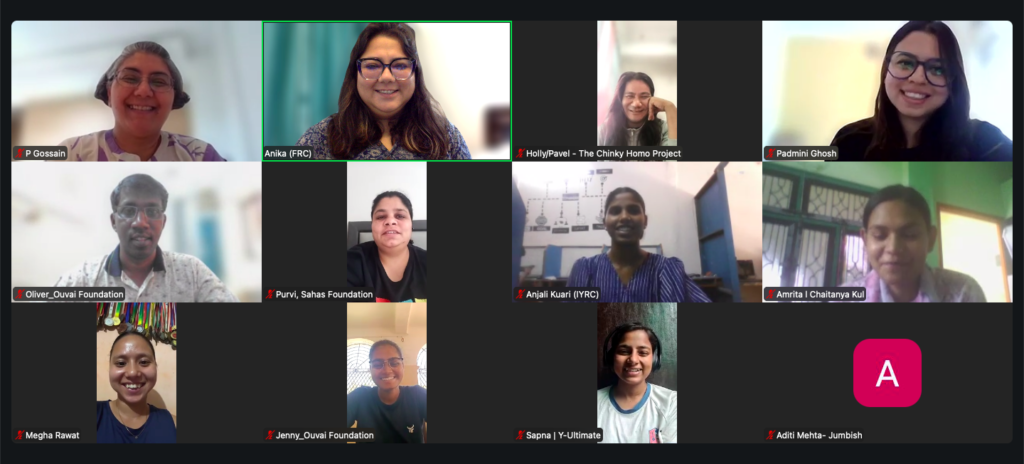
These ideas were at the heart of our Community Connect Communications Workshop, held on 25 June as part of FRC’s ongoing Community Connect 2026 Capacity Building Series. Led by Anika Verma, Founder of AVNew Communication Consultants, the workshop brought together our partner cohort to explore how strategic communication can strengthen programmes, fundraising, partnerships, and advocacy for grassroots organisations working with children and young people.
Drawing on insights from a pre-workshop survey completed by the cohort, it was highlighted that organisations’ key communication priorities were building partnerships, strengthening fundraising efforts, and increasing public awareness. She emphasised that achieving these goals requires more than maintaining a social media presence. Communication needs to be embedded into an organisation’s work from the very beginning.
One of the key messages from the workshop was that communication should not be treated as an afterthought. Instead, organisations should integrate it into programme design by documenting stories, collecting data, and engaging communities throughout the life of a project. This creates sustainable systems that not only capture impact but also provide authentic content for future campaigns, donor engagement, and advocacy.
The workshop also explored the power of stories. While data demonstrates the scale of an issue, personal experiences create emotional connections that encourage people to act. Rather than viewing stories and evidence as separate approaches, participants were encouraged to combine both. A single lived experience, supported by relevant data, can effectively communicate broader social challenges while maintaining credibility and authenticity.
Participants shared their own experiences of using storytelling in campaigns, including initiatives to raise awareness about disability rights. The discussion highlighted an important challenge for grassroots organisations, balancing hopeful narratives with honest conversations about the barriers communities continue to face. Authentic storytelling means presenting communities with dignity while ensuring their voices remain at the centre of the narrative.
Fundraising is challenging for most organisations, but it can be especially difficult for grassroots organisations where communications are often managed by team members alongside their other responsibilities. Effective fundraising begins with clarity. Organisations should have clear mission and vision statements, supported by concept notes that answer five essential questions: what is the project, why is it needed, who will benefit, how will it be implemented, and when will activities take place. Investing time in these foundations strengthens fundraising proposals, builds trust with donors and digital fundraising platforms, and makes future fundraising efforts much easier.
The workshop also encouraged participants to think beyond individual social media posts and adopt integrated communication and campaign strategies. It explored practical realities of different platforms and how they can support networking, partnerships, storytelling, community engagement, donor relations, and educational content. Participants were encouraged to use clear, accessible language and, where appropriate, communicate in both English and regional languages to reach wider audiences.
The discussion also covered practical ways to amplify organisational work by engaging journalists, issue-based influencers, and community champions, alongside creating compelling headlines that establish urgency and foster human connections.
Another important conversation focused on the growing role of artificial intelligence in nonprofit communications. While AI can improve efficiency and support content creation, it should never replace human judgement. Participants discussed the importance of verifying information, protecting the privacy and dignity of vulnerable communities, and ensuring that technology is used responsibly and in ways that align with organisational values.
The workshop reinforced the broader purpose of FRC’s Community Connect series, which aims to strengthen the capacity of grassroots organisations beyond individual training sessions. Participants get to connect with peers, share knowledge, and build networks across the Community Connect 2026 cohort. The session showed that strategic communication is more than visibility. It helps organisations build trust, strengthen partnerships, mobilise resources, and amplify community voices, making it an essential part of creating lasting social change.