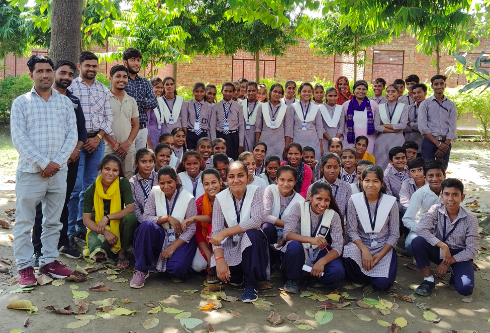
Sahas Foundation’s work focuses on empowering adolescents and young people to address issues of gender, sexuality, and mental health, while enabling them to challenge gender-based violence through a rights-based perspective. We are committed to building safe spaces where adolescents and young people find the courage to ask questions, stand up for their rights, and challenge social inequalities and injustice in their communities and the world at large. We also engage with parents, teachers, women, administrative officials, and social workers through gender sensitisation initiatives, thereby contributing to a more gender-sensitive ecosystem.
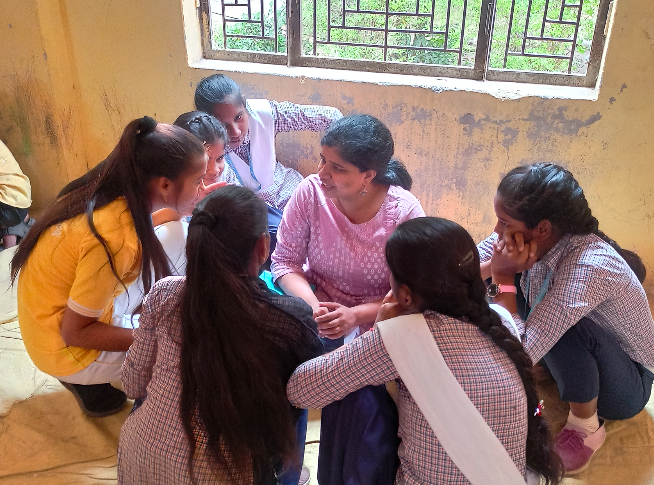
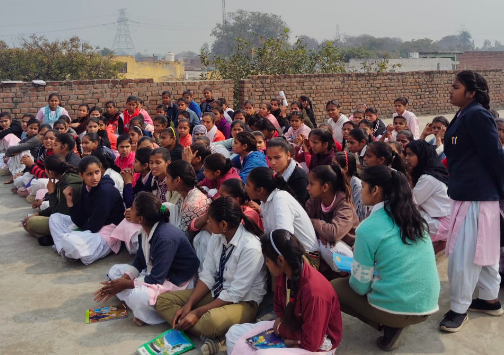
For the past five years, we have been engaging adolescent girls through the Sahasi Girls (Courageous Girls) programme. The programme began in 2020 with the intention of engaging women on issues of gender, sexual health, and financial literacy. However, the realities of Khushipura village, where girls dropped out of school as early as the age of 13, were expected to perform household chores, and were often married by the age of 14, compelled us to shift our focus towards adolescent girls.
Impact of Our Work
In December 2020, we organised our first large-scale community event, where more than 50 young girls participated alongside over 200 community members. During our initial mobilisation efforts, we reached only 10–15 girls. Today, that number has grown to over 200 girls in a single village.
In 2020–21, only 5–7 girls were attending the nearby school. Through our education initiatives, including scholarships and after-school classes, more than 90% of the girls are now back in school. This year alone, four girls from Class 12 and two girls from Class 10 passed their board examinations with excellent results. One of the girls scored 80% in her board examinations, an achievement that would have been unimaginable just four years ago and has become possible through feminist mentorship and girl-centred programming.
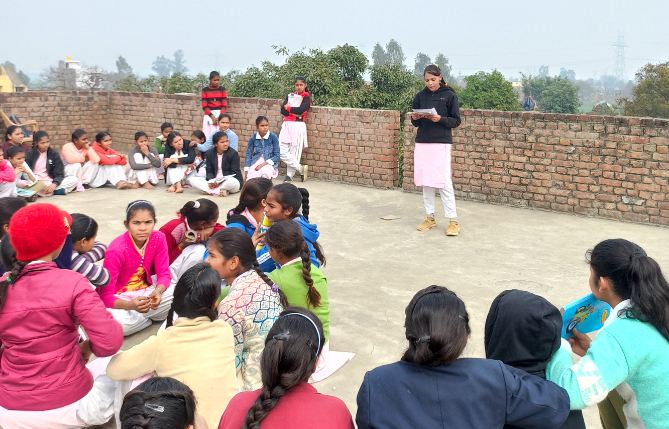
The girls who were once invisible, hesitant to speak, or reluctant to share their thoughts are now pursuing their education, participating in arts and sports, and leading peer learning sessions. This transformation is one of our greatest achievements.
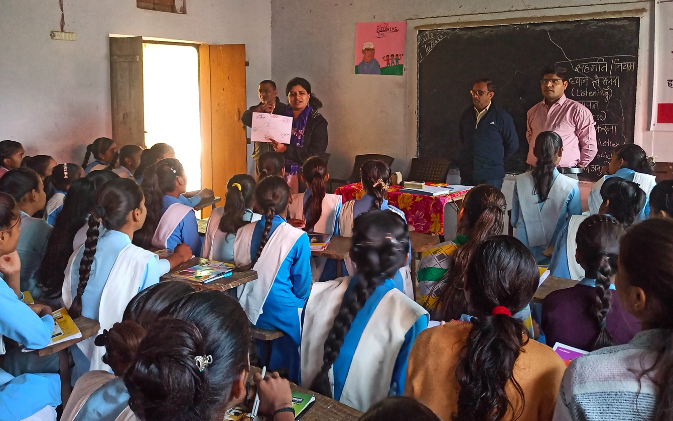
Alongside our community work in Khushipura village and in ten schools across various blocks of Aligarh, we have been actively involved in campaigns to challenge gender-based violence in India. In August 2025, we led a month-long campaign, “STOP FEMICIDE in India,” which included a series of three webinars featuring six speakers and more than 50 participants representing 25 organisations from different states across India. The campaign was particularly significant because conversations around femicide remain largely absent in India, and even NCRB data does not adequately capture the growing number of women and girls murdered because of their gender. Through this campaign, we emphasised the importance of discussing femicide as urgently as other forms of gender-based violence, highlighted its intersectional dimensions, and explored how community-based organisations can address the deadliest form of gender-based violence.
Learning from FRC
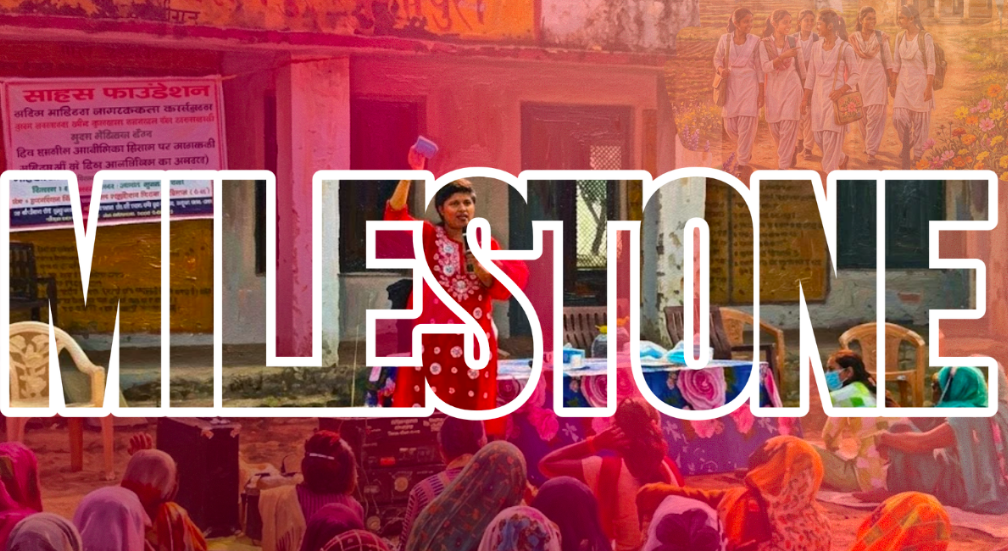
Sahas Foundation has now completed ten years of gender justice work and activism to challenge gender-based violence in India. This milestone presents an important opportunity for us to reflect, review, and reimagine our commitment, values, and future direction while strengthening our organisational structures, governance, and compliance systems. The learning sessions conducted by FRC inspired us to rethink the role of our Board beyond statutory compliance.
We intend to engage Board members in reflecting on their involvement with Sahas Foundation’s work and their alignment with the organisation’s vision and values, while establishing a structured process for recruiting members with diverse skills and experiences. One approach that particularly resonated with us is inviting prospective Board members to volunteer with the organisation before formal induction, allowing both the individual and the organisation to assess their alignment before formal induction.
Over the years, we have worked extensively in Delhi and Aligarh while collaborating with local organisations and educational institutions in several other cities. Although these partnerships have expanded our impact, they have also placed greater demands on our small team, which manages programme implementation, logistics, and coordination. This year, we intend to strategically organise and strengthen our efforts so that we can expand our programmes beyond Delhi and Aligarh into other states in a manner that is sustainable, community-centred, and community-led.
Our programmes engage children as young as seven years old and adolescent girls up to the age of eighteen, making safeguarding central to our work. As we were developing our Child Protection Policy and Girl Protection Policy under the Sahasi Girls Programme, our co-founder participated in the FRC session on “Safeguarding Principles and Policies” under their Community Connect capacity-building initiative. The session helped us understand that safeguarding is a shared responsibility extending beyond staff to volunteers, partner institutions, and the wider community.
We have incorporated several learnings from the session into our safeguarding policy, which is currently under review. Going forward, we also intend to allocate a dedicated portion of our budget towards regular safeguarding training and periodic policy reviews to ensure that our practices continue to respond to the evolving needs of the communities we serve.
The FRC session on communications also addressed many of our misconceptions about organisational communications. Previously, we viewed communications primarily as storytelling and social media campaigns. The session helped us recognise that reports, organisational documents, websites, and every interaction with stakeholders are equally important parts of organisational communications. We were particularly inspired by the discussion on how a single story can strengthen fundraising, partnerships, advocacy, and long-term relationships. The example of a person with disabilities obtaining a disability certificate after a two-year journey encouraged us to think about developing a broader campaign around the realities of inclusion, systemic barriers, and pathways for change.
Note from FRC
Our partner, Sahas Foundation, is a not-for-profit organisation working in the villages of Aligarh, Uttar Pradesh, with a shared vision of creating a world free from gender-based violence. Our partnership with Sahas Foundation spans several years and reflects our shared commitment to gender justice, investing in young people, and ensuring that truly grassroots organisations like Sahas have the support they need to grow sustainably and scale their impact. Their work with adolescent girls continues to strengthen our own commitment to rebuilding childhood and reimagining education.
Find Sahas Foundation on the web:
Website: sahasfoundation.org.in
Facebook: facebook.com/Sahas.communitydevelopment
Linkedin: linkedin.com/company/sahas-india
YouTube: youtube.com/channel/UCeAsCPgzZfR4Sw6IQmWOWhg
Instagram: instagram.com/sahas